

With the advancement of technology, usage of computers has shifted to mobiles and tablets. Statistics show that next-generation internet users will be predominantly mobile. This shift has profound implications for SEO, culminating in Google’s mobile-first indexing initiative.
What is Mobile-First Indexing?
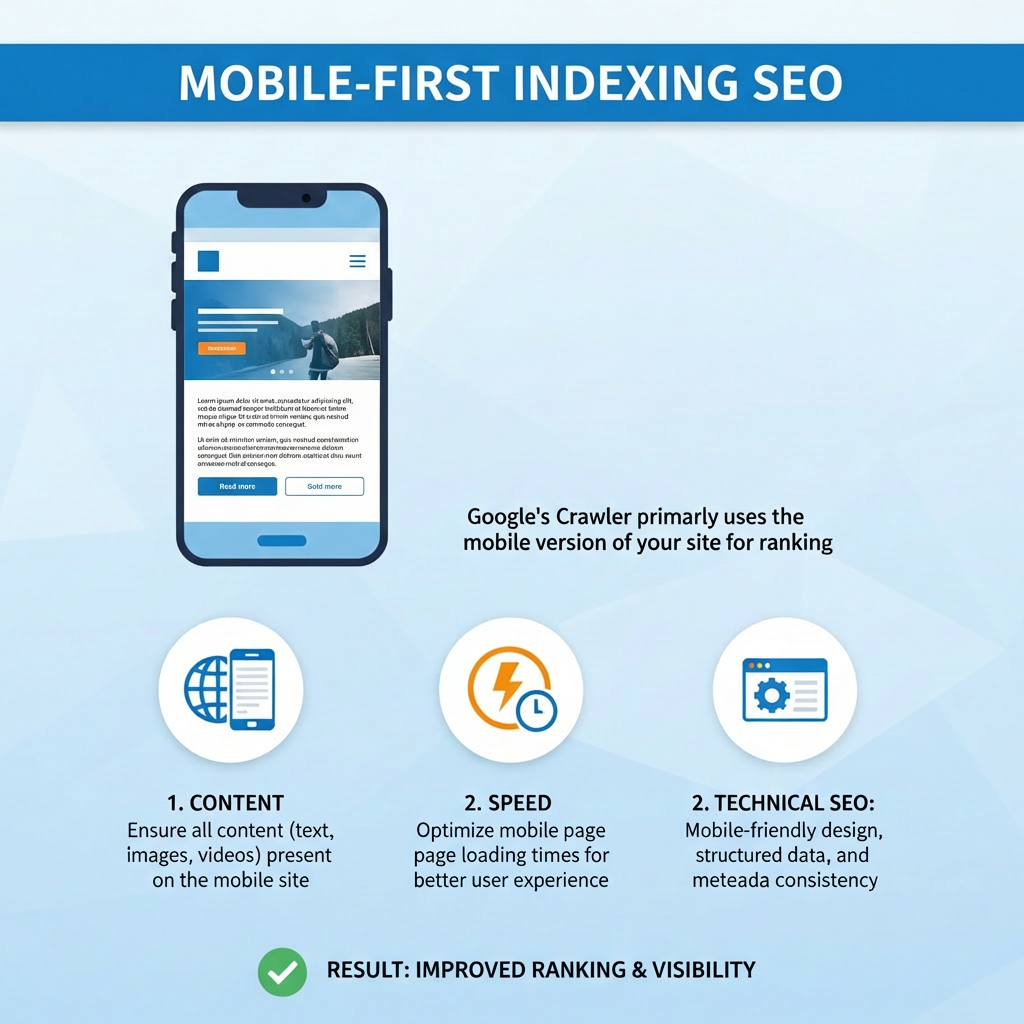
Mobile-first indexing means Google predominantly uses the mobile version of a website’s content for indexing and ranking. Previously, Google’s crawling and indexing was based on desktop versions of pages.
This is a fundamental shift: if your mobile site has less content, fewer links, or worse user experience than your desktop site, you may see ranking drops.
Why Google Made This Change
The data is clear:
- Over 60% of Google searches now happen on mobile devices
- Time spent on mobile apps and mobile web continues to grow year-over-year
- Users expect seamless mobile experiences
By switching to mobile-first indexing, Google ensures its search results reflect how the majority of users actually access the web.
Checking if Your Site is Ready for Mobile-First Indexing
Use these tools to assess your mobile readiness:
- Google’s Mobile-Friendly Test (search.google.com/test/mobile-friendly)
- Search Console’s Mobile Usability Report — shows specific mobile issues
- PageSpeed Insights — measures mobile load performance
- Chrome DevTools Device Mode — simulates your site on various mobile devices
Key Requirements for Mobile-First Indexing
1. Responsive Design
Responsive design is the recommended approach. Your site should adapt seamlessly to any screen size using CSS media queries and flexible layouts.
2. Content Parity
Your mobile site should have the same content as your desktop site. Hiding content on mobile to save space can harm rankings if that content was helping your desktop rankings.
3. Equivalent Structured Data
Any Schema markup on your desktop site should also be present and correct on your mobile site.
4. Mobile-Appropriate Ad Placements
Intrusive interstitials and large ad placements that block mobile content trigger Google penalties.
5. Fast Mobile Load Times
Mobile users are often on slower connections. Prioritize image optimization, lazy loading, and eliminating render-blocking resources for mobile performance.
Technical Checklist for Mobile-First Indexing
- Ensure Googlebot can crawl your mobile content (check robots.txt)
- Verify mobile page canonical tags are correct
- Check that hreflang implementation works on mobile
- Ensure all resources (images, JS, CSS) are crawlable
- Test mobile page speed with PageSpeed Insights
Adapting to mobile-first indexing is not just about passing Google’s requirements — it’s about delivering the experience that the majority of your users actually expect when they visit your site on their phones.
Leave a Reply